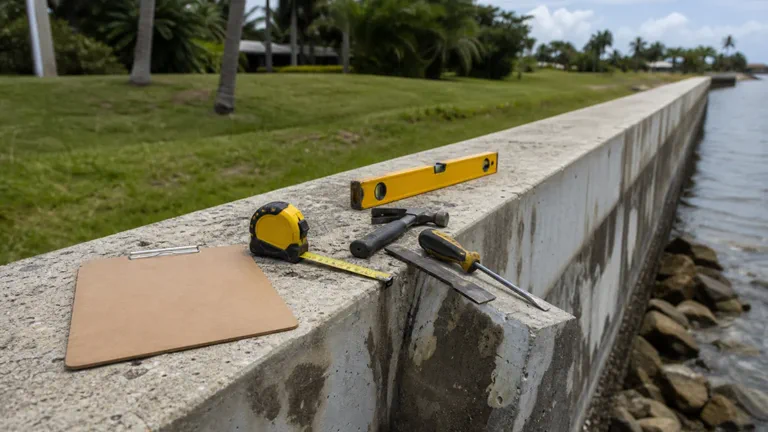
Waterfront warning signs
Seawall Warning Signs Around Punta Gorda Waterfront Homes
The useful question is whether the wall looks like surface wear, active washout, drainage pressure, or movement that is spreading toward the yard, dock, or cap. You do not need a complete diagnosis before calling.
What owners usually notice first
On Punta Gorda and Charlotte Harbor waterfront lots, the warning signs that matter most are usually visible before anyone knows the final repair scope. The goal here is to separate cosmetic wear from the signs that point to a broader waterfront wall problem.
- Length of movement. Look at how much wall length shows cap cracking, panel separation, leaning, settled pavers, or soil loss behind the face.
- Relationship to the dock and lift. Notice whether the damage runs under a dock edge, near a boat lift, beside stairs, or toward utilities and hardscape that tighten access.
- Note drainage behavior. After rain, where does water flow? Does it run toward the wall, pool behind the cap, or exit through a specific area?
- Check for change over time. Compare what you remember from prior weeks if available. New cracks, wider gaps, or expanding soft spots may change urgency.
- Identify nearby structures. Mention docks, boat lifts, stairs, utilities, pavers, seawall cap features, landscaping, and neighboring walls.
- Describe timing. Note recent storms, construction, excavation, irrigation changes, or heavy rain before symptoms appeared.
Questions to ask during the estimate
Ask what appears to be causing the symptom, what repair method is recommended, what is included, what is excluded, and what conditions could change the final scope. Drainage, backfill, compaction, surface restoration, access, and permits should be discussed directly.
If a contractor cannot answer without seeing the site, that is normal for many seawall issues. A short plain-language description is enough to start; the professional can tell you what else is needed after the first conversation.